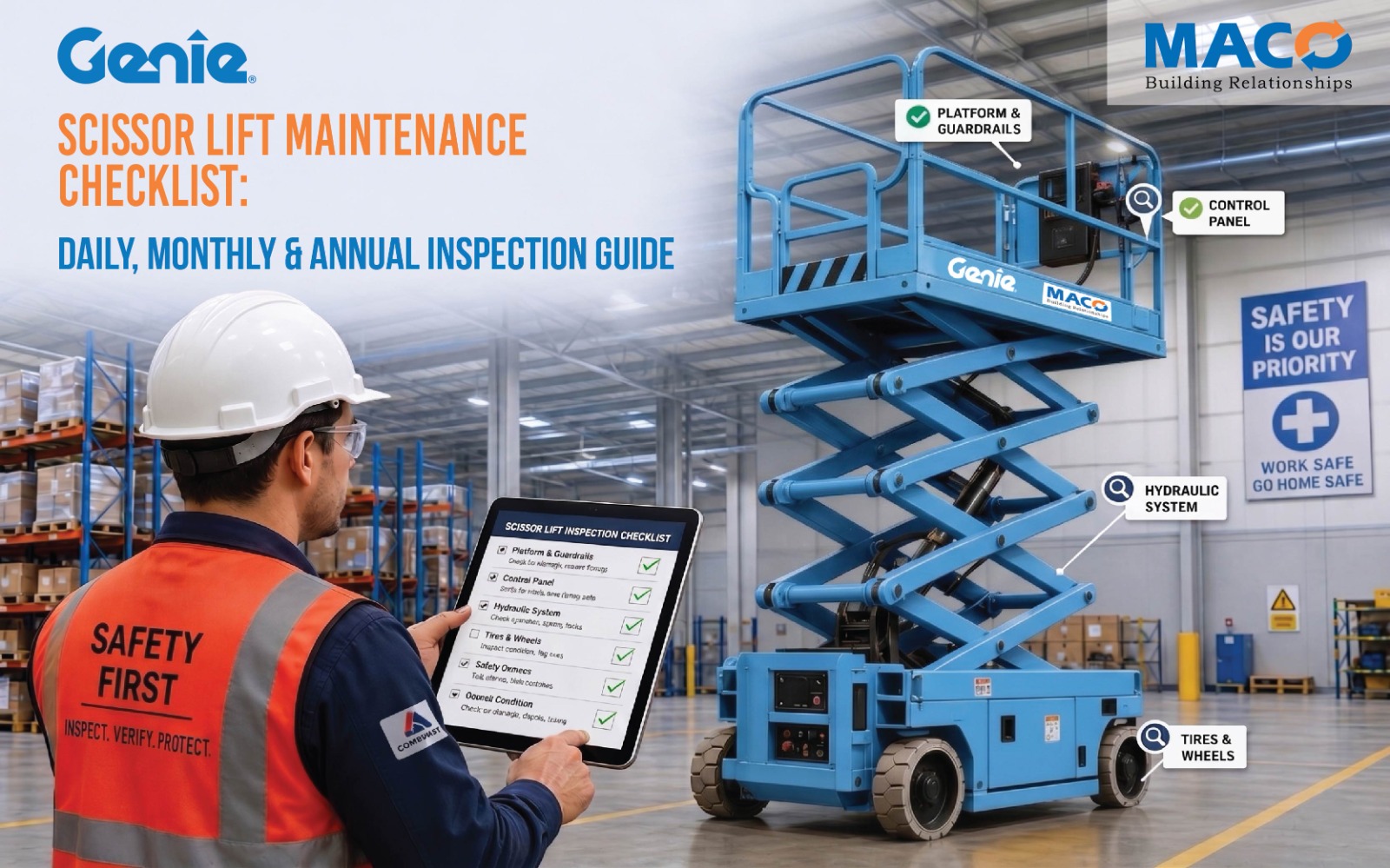
Operating mobile elevated work platforms safely requires rigorous maintenance protocols. Understanding how to maintain scissor lift equipment protects your workforce and maximizes uptime across warehouse operations, construction sites, and manufacturing facilities.
Understanding Inspection Frequency Requirements
How Often Should Scissor Lifts Be Inspected
According to OSHA and ANSI A92.6 standards, aerial work platforms require inspection before each use, with comprehensive evaluations at regular intervals. Regulations mandate that a competent person must verify equipment condition before operation.
For industrial operations in India, MEWP inspection regulations align with international standards, requiring documented inspections and maintenance records for compliance.
Daily Scissor Lift Inspection
What to Check Before Using Scissor Lift
The daily scissor lift inspection forms the foundation of preventive maintenance. Before each shift, operators must complete a comprehensive pre-operation safety check.
Visual Ground-Level Inspection
Walk around the equipment checking for:
- Safety decals and operating instructions (legible and intact)
- Structural damage, cracks, or weld defects on scissor arms
- Hydraulic fluid leaks beneath the machine
- Tire condition including cuts, wear, or improper inflation
- Guardrail damage or missing hardware
Hydraulic System Checks
Examine fluid reservoirs and inspect hoses for wear, abrasion, or bulging. Check for cylinder leaks including oil residue on rods or connection points.
Battery and Electrical Systems
For electric models, verify battery charge levels, inspect terminals for corrosion, and ensure all electrical connections remain secure.
Platform Controls Testing
Test all functions including:
- Lift and lower operations (smooth response)
- Drive controls (forward and reverse)
- Steering mechanism (no excessive play)
- Emergency stop button (immediate function cessation)
- Motion alarms and horn
- Tilt alarm sensors
- Overload warning systems
Fall Protection Inspection
Verify guardrails remain secure, entry gates close and latch properly, and all platform railings meet height requirements. Document and correct any deficiencies before operation.
Daily Inspection Checklist Components
A comprehensive scissor lift inspection checklist should include:
Visual Items:
- Machine cleanliness and general condition
- Warning labels and instruction plates
- Structural integrity (no visible damage)
- Tire inflation and condition
- Fluid leak detection
Functional Tests:
- Ground and platform controls
- Emergency lowering system
- Motion and tilt alarms
- Emergency stop functionality
- Lift/lower cycle smoothness
- Drive and steering operation
Safety Systems:
- Platform guardrails and gates
- Toe boards properly installed
- Lanyard attachment points
- Fire extinguisher accessibility
- Safety interlocks functioning
Monthly Scissor Lift Maintenance
Hydraulic System Evaluation
Monthly scissor lift maintenance expands beyond daily checks to include deeper system analysis. Measure fluid levels and assess oil condition—dark, contaminated oil requires system flushing.
Examine hydraulic hoses for:
- Surface cracking or weather checking
- Soft spots indicating deterioration
- Loose or leaking fittings
- Proper routing without sharp bends
Inspect scissor arm pivot points for wear, verify lubrication, and check retention bolt torque values.
Electrical and Battery Systems
For electric models, test electrolyte levels (flooded batteries), clean terminals, and conduct load testing. Document charge times and runtime to identify degrading performance.
Inspect wiring harnesses for abrasion, particularly near moving components. Verify limit switches and safety sensors respond appropriately.
Structural and Tire Inspection
Measure tread depth, sidewall condition, and inflation pressures. For solid or foam-filled tires, examine for missing chunks or excessive wear indicating alignment issues.
Examine welds on the scissor mechanism and platform mounting points. Any discovered cracks require immediate qualified technician attention.
Monthly Documentation Requirements
Record:
- Hydraulic fluid level and condition
- Battery voltage and electrolyte levels
- Tire pressures and tread depth
- Hydraulic hose and cylinder condition
- Electrical system operation
- Structural weld integrity
- Lubrication completion per manufacturer schedule
- Abnormal noises or operational concerns
Quarterly Service: 150-Hour Inspection
Intermediate Service Components
This service interval includes all daily and monthly checks plus:
- Hydraulic system pressure testing
- Load testing for rated capacity verification
- Pivot point lubrication per specifications
- Hydraulic cylinder inspection for scoring or leakage
- Safety system calibration verification
- Drive system component inspection
- Descent velocity control testing
Annual Scissor Lift Inspection
Comprehensive Machine Evaluation
The annual scissor lift inspection represents the most thorough assessment. A competent person or certified technician documents machine condition and identifies necessary repairs.
Structural Integrity Assessment
Examine all welds, scissor mechanism for cracks or deformation, and platform mounting security. Critical welds may require dye penetrant or magnetic particle testing.
Safety System Certification
Annual certification includes:
- Overload sensor calibration
- Emergency stop button functionality testing
- Tilt alarm sensor verification
- Fall protection guardrail strength requirements
- Descent velocity controls and relief valves
- Platform gate interlock inspection
Load Testing Procedures
Apply rated loads to the platform and verify lift/lower cycle times, hydraulic pressure readings, and structural deflection within specifications. Document results for compliance records.
Component Inspection
Examine:
- Hydraulic cylinders for wear and leakage
- Pumps and motors for unusual noise
- Electrical motors, contactors, and controls
- Battery condition and charging systems
- Tire wear patterns and wheel bearings
- Pins, bushings, and pivot points
- Structural members for fatigue or corrosion
Annual Documentation Requirements
Complete records must include:
- Equipment identification and model
- Inspection date and technician certification
- Complete checklist with pass/fail status
- Load test results with performance data
- Safety system calibration certificates
- Photographs of damage or concerns
- Repair recommendations with priorities
- Return-to-service authorization
- Next scheduled inspection date
Developing Your Maintenance Program
Usage-Based Inspection Frequency
Light duty (under 2 hours daily): Monthly comprehensive checks
Medium duty (2-6 hours daily): Bi-weekly detailed inspections
Heavy duty (6+ hours daily): Weekly system evaluations
All equipment: Daily pre-operation checks regardless of usage
Maintenance Interval Tracking
- Hour meter readings at each inspection
- Service alerts at 150, 500, 1000, and 2000 hours
- Annual calendar-based inspections regardless of hours
- Post-incident inspections after abnormal events
Documentation Systems
- Pre-printed daily forms attached to each machine
- Digital tracking for monthly and annual inspections
- Centralized maintenance database with equipment history
- Compliance file with all regulatory records
Training Requirements
Operator Training
Operators need basic inspection training covering what to check before using scissor lift equipment, recognizing defects, understanding safety features, and reporting procedures.
Maintenance Personnel Training
Advanced training covers:
- Manufacturer-specific service procedures
- Hydraulic system diagnosis and repair
- Electrical troubleshooting
- Load testing protocols
- Safety system calibration
- Structural repair qualifications
Competent Person Certification
Personnel conducting annual inspections must demonstrate knowledge of regulations, manufacturer specifications, and hazard recognition. Third-party certification is often required.
Common Inspection Failures
Hydraulic System Leaks
Most common failure type. Monthly fluid monitoring identifies developing leaks before catastrophic hose failure. Replace hoses showing surface cracking proactively.
Battery-Related Failures
Cause significant downtime on electric models. Implement proper charging protocols, maintain electrolyte levels, and replace batteries showing reduced capacity.
Damaged Guardrails
Compromise fall protection. Repair bent, cracked, or loose components immediately. Gate interlock switches must prevent elevation when gates are open.
Worn Tires
Affect stability and maneuverability. Replace when tread depth falls below minimums or sidewall damage appears. Maintain proper inflation to prevent uneven wear.
Neglected Lubrication
Accelerates pivot point wear. Follow manufacturer lubrication schedules using specified grease types, especially on scissor arm pivots.
Conclusion
Implementing comprehensive maintenance combining daily scissor lift inspection, monthly scissor lift maintenance, and annual scissor lift inspection protocols protects workers and maximizes reliability. A complete scissor lift inspection checklist creates the foundation for safe operations.
Partner with Maco Corporation Pvt Ltd
For reliable scissor lift solutions, Maco Corporation Pvt Ltd offers India’s most comprehensive rental and purchase options. As an authorized Genie distributor, Maco Corporation provides:
- Extensive equipment inventory for diverse industrial applications
- Certified technician support and maintenance services
- Flexible rental programs with inspection-ready equipment
- Genuine parts availability and emergency repairs
- Complete compliance documentation and certification
Contact Maco Corporation Pvt Ltd today for professional scissor lift solutions that prioritize safety and operational excellence.
FAQs
1. How often should scissor lifts be inspected according to OSHA and ANSI standards?
Scissor lifts require inspection at multiple intervals: daily pre-operation checks by the operator before each use, monthly comprehensive inspections examining hydraulic systems, batteries, and structural components, and annual certifications by qualified technicians including load testing and safety system calibration. Additionally, any scissor lift involved in an incident (tip-over, impact, overload) must be inspected by a competent person before returning to service. Documentation of all inspections must be maintained for regulatory compliance.
2. What should I do if my scissor lift fails the daily inspection?
Immediately tag the equipment “Out of Service” with highly visible signage and lock out the controls to prevent unauthorized use. Document the specific deficiency discovered, including photographs if possible. Notify your maintenance supervisor or facility manager immediately. Do not attempt repairs unless you are qualified and authorized. Contact certified technicians or your equipment provider for evaluation and repair. Only a competent person should authorize return-to-service after verifying proper repairs and conducting appropriate retesting of affected systems.
3. Can I operate a scissor lift with minor hydraulic fluid leaks?
No, you should never operate a scissor lift with any hydraulic leaks. Even minor leaks indicate compromised system integrity and can rapidly worsen during operation, potentially causing sudden platform descent or complete hydraulic failure. Hydraulic fluid on the ground also creates slip hazards. Small leaks today often become catastrophic hose failures tomorrow. Tag the equipment out of service immediately and have qualified technicians identify the leak source, replace damaged components, and verify system integrity before returning the scissor lift to operation.
4. Who is qualified to perform annual scissor lift inspections?
Annual inspections must be conducted by a “competent person” as defined by OSHA—someone with knowledge, training, and authority to identify hazards and take corrective action. This typically requires manufacturer-specific certification, understanding of ANSI A92.6 standards, and demonstrated competency in scissor lift systems. Many organizations use manufacturer-certified technicians, third-party inspection services, or specially trained in-house personnel with documented qualifications. The inspector must be capable of performing load testing, safety system calibration, structural assessment, and complete documentation.
5. How long should I keep scissor lift inspection records?
Maintain complete inspection records for the equipment’s entire service life, with most regulatory jurisdictions requiring minimum retention of 3-5 years. Records should include daily pre-operation checklists, monthly maintenance logs, quarterly service reports, annual certifications, all repair documentation, and incident reports. Digital tracking systems or physical logbooks should document dates, inspector names, items checked, deficiencies found, corrective actions taken, and return-to-service authorizations. These records demonstrate due diligence during regulatory audits, support warranty claims, and provide maintenance history for equipment lifecycle management.