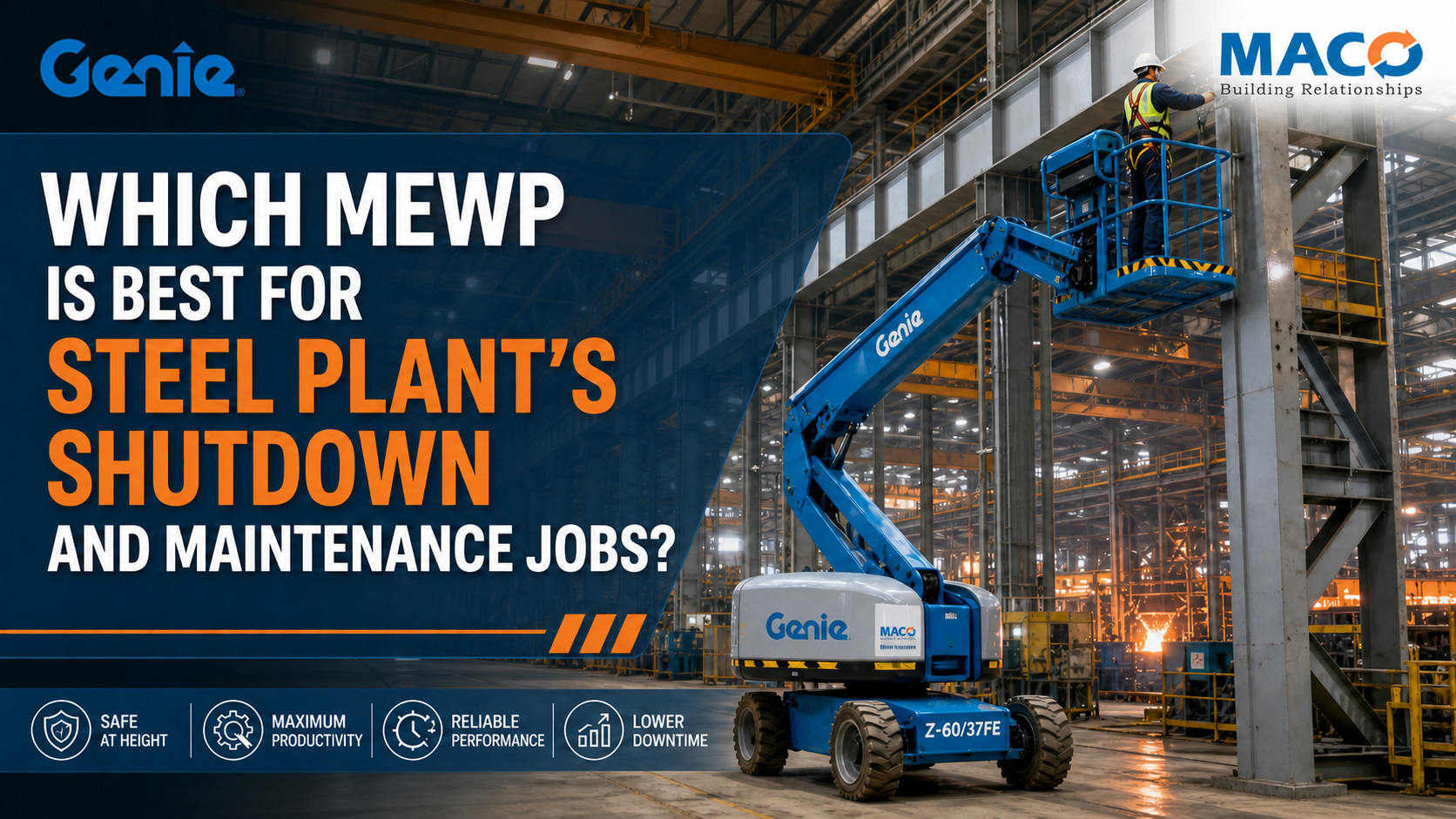
Choosing the right mobile elevated work platform (MEWP for steel plants, manufacturing plant maintenance, and shutdown jobs directly impacts safety, downtime and overall productivity. A query‑based approach—starting from “What task and bay conditions do I have?” helps you select between boom lifts, scissor lifts and aerial work platforms more accurately.
Key MEWP Types for Steel and Manufacturing Plants
Boom lifts for complex bays
- Best for accessing crane runway inspection, pipe rack maintenance and structures over congested equipment.
- Allow the chassis to stay away from hot zones, rails and heavy traffic while the platform reaches difficult points.
- Ideal for steel plant shutdown maintenance and high‑level structural inspection.
Scissor lifts for vertical access
- Provide straight vertical movement with a wide deck for multiple technicians and tools.
- Suitable for cable tray maintenance, utility line repair, lighting and panel work in production sheds.
- Work well in relatively clear overhead areas with consistent floor loading.
Compact aerial work platforms for tight spaces
- Designed for MCC room maintenance, utility buildings and narrow service corridors.
- Useful where floor load limits and small turning radius are critical constraints.
- Replace unsafe ladders and minimise the need for small, awkward scaffolds.
How to Select the Right MEWP: Practical Points
Step‑by‑step selection checklist
- Define required working height and horizontal reach for each task.
- Identify whether the job is indoor or outdoor and note bay dimensions and access paths.
- Check floor conditions near pits, crane rails and trenches, including load limits.
- Map overhead obstructions such as cranes, ducts, pipe bridges and cable racks.
- Match these parameters to boom lift, scissor lift or compact AWP, focusing on safety, manoeuvrability and task fit—not just maximum height or price.
Benefits for Shutdown and Maintenance Planning
Why query‑based MEWP selection improves results
- Reduces delays from wrong equipment deployment and repeated repositioning.
- Cuts dependence on extensive scaffolding for inspections and short‑duration repairs.
- Supports stronger work at height safety KPIs by aligning platforms to real plant conditions.
- Helps maintenance and operations teams standardise MEWP selection for recurring tasks across bays and shops.
Conclusion: Choose a reliable MEWP seller
For Indian steel plants and manufacturing facilities looking to improve shutdown performance and safety with advanced Genie MEWPs, Maco Corporation Pvt Ltd is one of the most reliable sellers, offering trusted equipment, technical support and application‑driven guidance tailored to your plant conditions.
FAQs
Q1. Which MEWP is best for crane bay inspection in steel plants?
Articulated boom lifts are usually preferred because they can reach over crane girders, runways and equipment while keeping the base outside the main operating zone.
Q2. When should I use a scissor lift instead of a boom lift?
Use scissor lifts when you need straight vertical access, more deck space for technicians and tools, and relatively clear overhead areas in sheds.
Q3. Can MEWPs replace scaffolding during shutdowns?
MEWPs can significantly reduce scaffolding for inspections and short‑duration repairs, but complex, long‑term projects may still require a combination of MEWPs and scaffold.
Q4. Are MEWPs suitable for hot, dusty steel plant environments?
They are, provided you select robust industrial Genie MEWP models, plan regular cleaning of sensors and controls, and follow a strict preventive maintenance schedule.
Q5. What is the first parameter to check before selecting a MEWP?
Start with required working height and outreach, then immediately verify ground conditions, floor loading and obstructions affecting safe positioning.
Q6. Should steel and manufacturing plants rent or buy MEWPs?
Plants with frequent shutdowns and regular work at height across multiple shops often benefit from owning a core MEWP fleet, using rentals for peak demand or specialised tasks.